
By Joseph Odok
The death of Mary Christiana Oga during a stampede at an empowerment programme organised by Cross River State’s First Lady, Bishop-Eyoanwan Bassey Otu, in Ogoja on 22 October 2026 is a human tragedy that demands sober reflection.
Police confirmed one fatality and at least one other person injured after a crowd surged for empowerment items. The incident exposed real pressures of hardship and serious lapses in crowd management. It should have prompted practical questions about planning, safety protocols, and how social interventions are delivered. Instead, within hours, videos especially of Portrait Peterson and commentaries appeared that converted the woman’s death into campaign material against Governor Bassey Otu’s re-election prospects.
One such video circulating on social media platforms is particularly revealing. It frames the stampede not primarily as a failure of organisation or a symptom of broader economic strain, but as political evidence against the sitting governor. The tone is accusatory, the timing opportunistic, and the effect is to reduce a family’s loss to a talking point in the long run-up to 2027. This is not accountability. It is the instrumentalisation of grief.
There is nothing inherently wrong with criticism of government. Opposition and civil society have every right (indeed a duty) to demand better planning for public events, transparent reviews of what went wrong, and improved systems so that future distributions do not end in preventable harm. The Cross River State Police Command has already stated that it is reviewing the sequence of events and has reiterated the need for proper crowd control and coordination. Those are legitimate lines of inquiry. What is illegitimate is the swift conversion of a death into electoral messaging. When activism becomes indistinguishable from campaign strategy, it loses moral authority and public trust.
The deeper problem is cultural. Nigerian public discourse too often treats every misfortune as an opportunity to settle political scores. A stampede becomes “proof” of incompetence; a successful project becomes “propaganda.” In this climate, the actual human cost (Mary Christiana Oga’s life, the trauma of the injured, the distress of families) is secondary. The video in question participates in that pattern. By linking the tragedy so directly to the question of whether Governor Otu should be re-elected, it lowers the quality of activism to the level of partisan point-scoring. It tells citizens that their suffering is useful mainly as ammunition.
This approach is self-defeating. Genuine accountability requires facts, timelines, and measurable recommendations. Was the venue suitable? Were expected numbers properly assessed? Were security and medical arrangements adequate? Did organisers have contingency plans? These questions matter far more than whether the incident can be weaponised against one politician. Structural challenges (poverty, food insecurity, weak logistics capacity) exist across administrations and states. Treating them as the exclusive property of one political actor obstructs solutions.
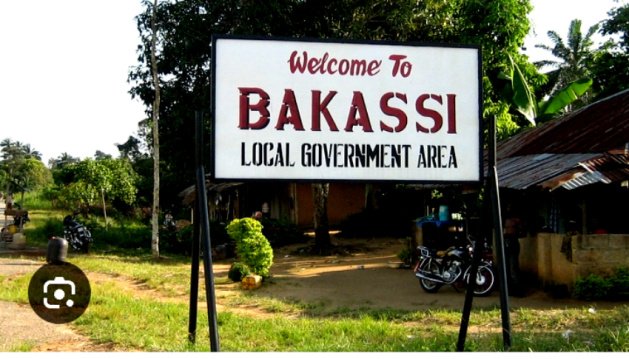
Cross River, like many states, faces genuine economic constraints. The loss of littoral status after the Bakassi cession and subsequent judicial rulings on oil wells reduced derivation revenue. Multidimensional poverty remains elevated. Nutrition indicators, while showing some improvement in places, still reflect serious gaps. These realities help explain why large numbers of people turn up for empowerment items. They do not justify turning a single woman’s death into a campaign video. Hardship is not a partisan possession.
Responsible voices should reject this style of engagement. Civil society groups, opposition parties, and online commentators can demand competence without exploiting the dead. Government, for its part, must respond with transparency: publish findings of the police review, improve protocols for future distributions, and invest in systems that reduce the need for chaotic, high-stakes handouts. The family of the deceased deserves dignity, not to have their loss recycled as political content.
Nigeria’s democratic conversation will remain stunted for as long as tragedy is treated as campaign fuel. The Ogoja stampede should stand as a call for better planning, stronger safety standards, and more serious attention to livelihoods. It should not become another exhibit in the tired theatre of political opportunism. Mary Christiana Oga’s death is a loss to her family and community. Reducing it to a tool against any governor diminishes everyone involved and further erodes the possibility of serious public problem-solving.
Dr Joseph Abang Odok is a Senior Lecturer, a Social Change Agent, a Lawyer, a Philosopher and writes from Abuja