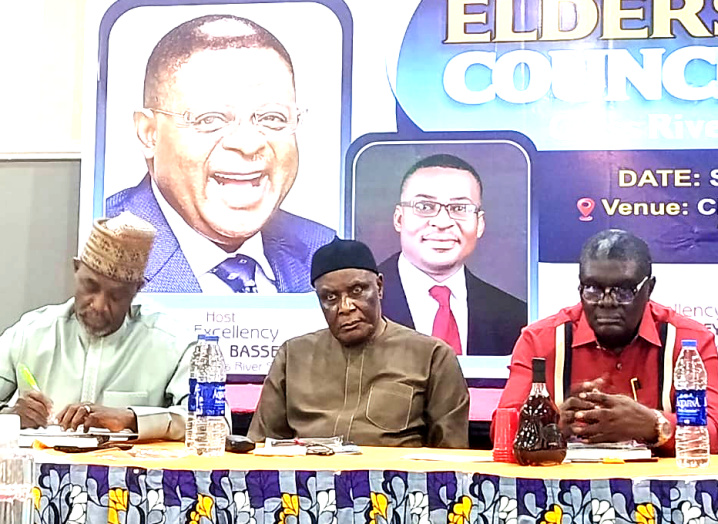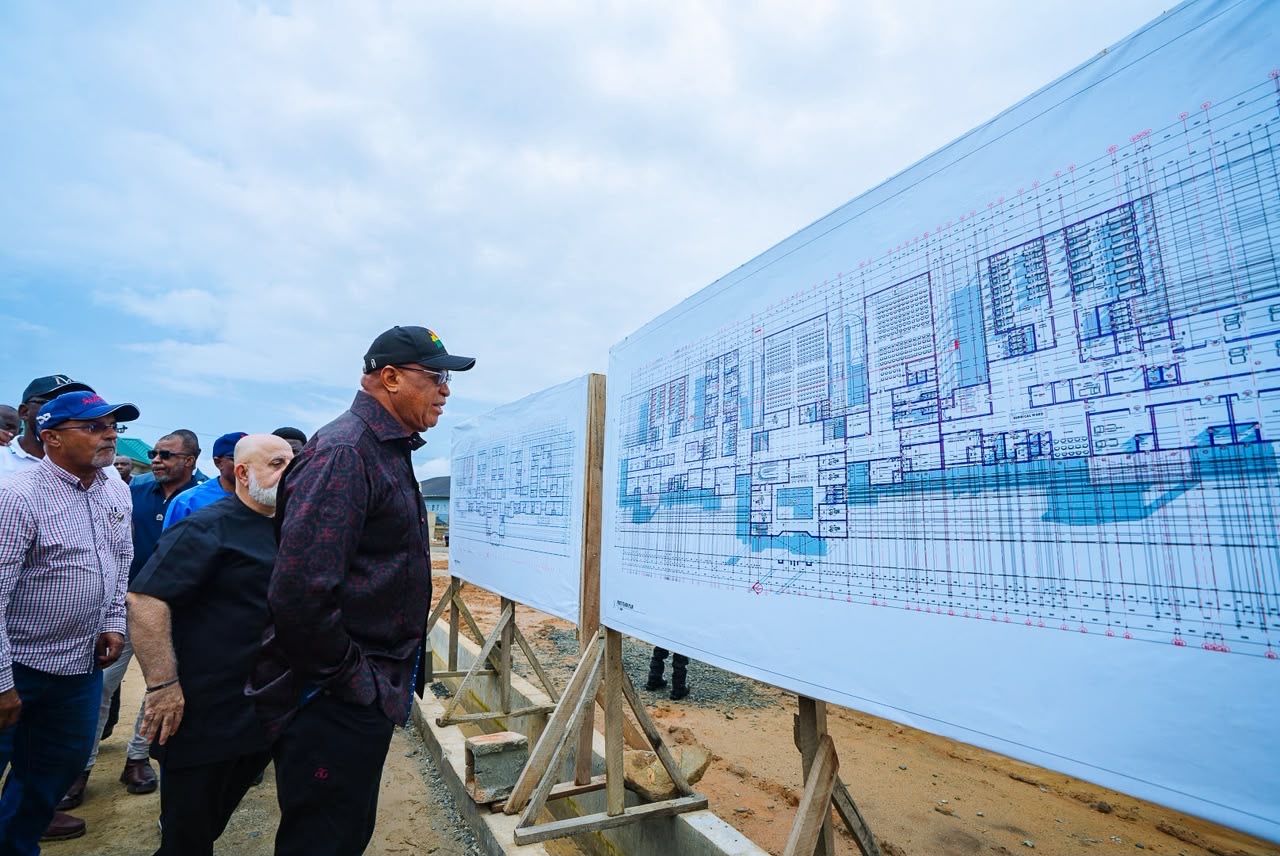
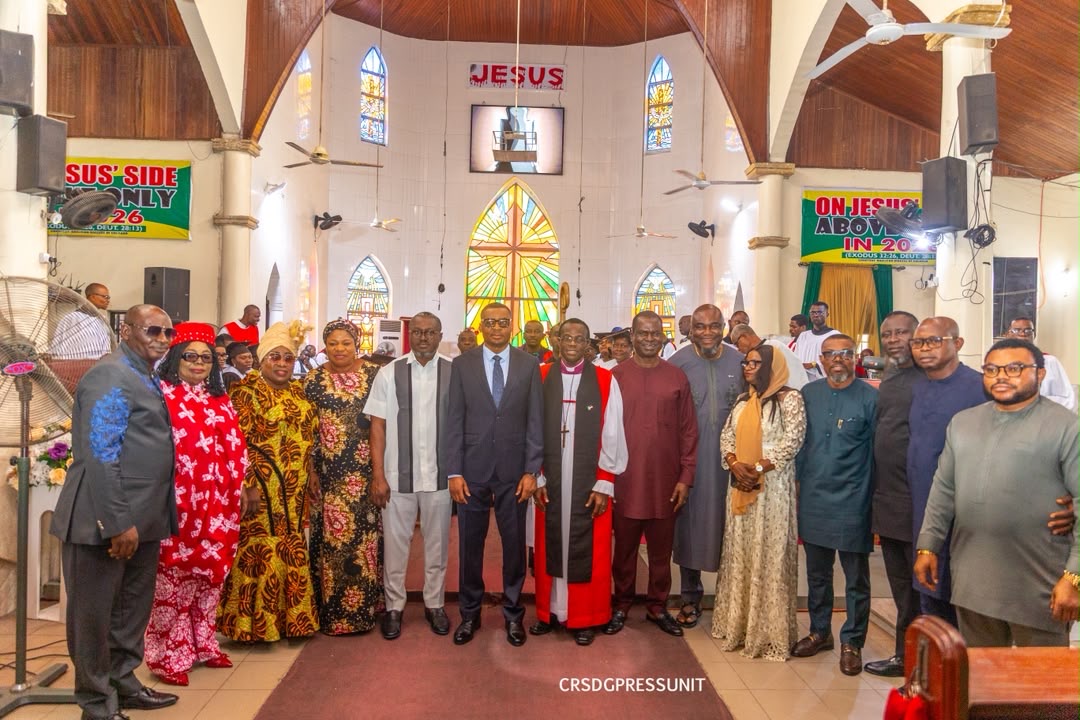
Middle: Deputy Governor, Rt. Hon. Peter Odey, on his left, Anglican Archbishop of Calabar Diocese, Rt. Rev. Prof. Nneoyi Onen Egbe, and others during the 27th Democracy Day anniversary on Friday
By Ita Williams, Calabar
27th Democracy: Anglican Archbishop of Calabar, Rt. Rev. Prof. Nneoyi Onen Egbe, has raised concern over what he termed the growing deficit of truth and trust between the Nigerian government and the people.
The cleric made the remarks during the Inter-Denominational Christian Thanksgiving Service organised by the Cross River State Government to commemorate the nation’s 27th Democracy Day.
Delivering his sermon before government officials, church leaders and residents, Egbe said the country must embrace honesty if democracy is to flourish.
He lamented that both leaders and followers had contributed to the erosion of trust in public life.
“Nigerians must stop deceiving themselves. Government is not being honest with the people, citizens are not being honest with government, and truth has become a casualty,” he said.
The bishop maintained that democracy derives legitimacy from the people and should reflect their aspirations.
“Democracy is supposed to be a system where power resides with the people, but what we have in Nigeria today falls short of that principle,” he stated.
He called for a sober national assessment of the country’s democratic experience.
According to him, confronting difficult realities remains the first step toward national renewal.
“If we truly want to move forward as a nation, we must be courageous enough to tell ourselves the truth about the state of our democracy,” Egbe said.
The cleric noted that Nigeria’s democratic culture appears disconnected from internationally recognised standards.
“Our understanding and practice of democracy appear different from globally accepted standards, where the will of the people is expected to prevail,” he added.
He also expressed worries over the increasing number of Nigerians seeking opportunities abroad.
“We must ask ourselves what kind of legacy we are leaving for our children when many parents see their future only outside the country,” he said.
Representing Governor Bassey Otu, Deputy Governor Peter Odey outlined the administration’s achievements in security and infrastructure.
He said peace had returned to many communities previously troubled by criminal activities.
“Residents now enjoy greater freedom of movement compared to previous years when insecurity posed serious challenges in parts of the state,” Odey stated.
He disclosed that government interventions had yielded positive outcomes through both kinetic and non-kinetic strategies.
“There came a time when about 171 of them surrendered. Out of that number, only three were from Cross River State, while the others came from outside the state,” he said.
Odey commended security agencies and reaffirmed the administration’s commitment to sustaining peace and development.
Speaking, the Commissioner for Information, Mr. Erasmus Ekpang, described Nigeria’s 27 years of uninterrupted democratic rule as a significant milestone in the nation’s history.
“Democracy may not be perfect, but it is better than military rule. We have made progress, and we must continue to strengthen our democratic institutions and freedoms,” Ekpang said.
The commissioner urged Nigerians to continue supporting democratic governance through peaceful coexistence, constructive criticism and prayers for leaders at all levels.
He also commended Governor Otu’s administration for sustaining peace and development in Cross River State, while encouraging residents to remain vigilant and work together for the continued growth of the state.
The service attracted government officials, religious leaders, civil servants, political actors and residents who gathered to reflect on Nigeria’s democratic journey and progress of the nation.