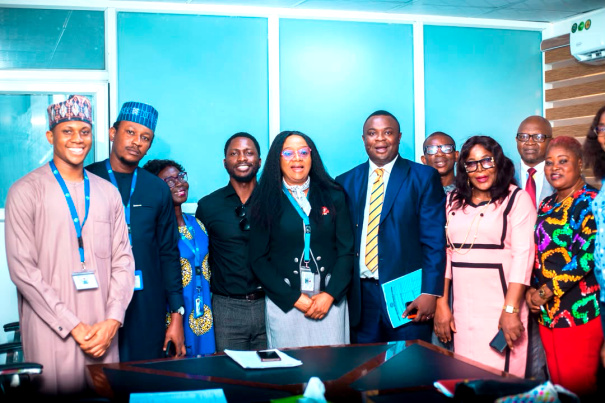
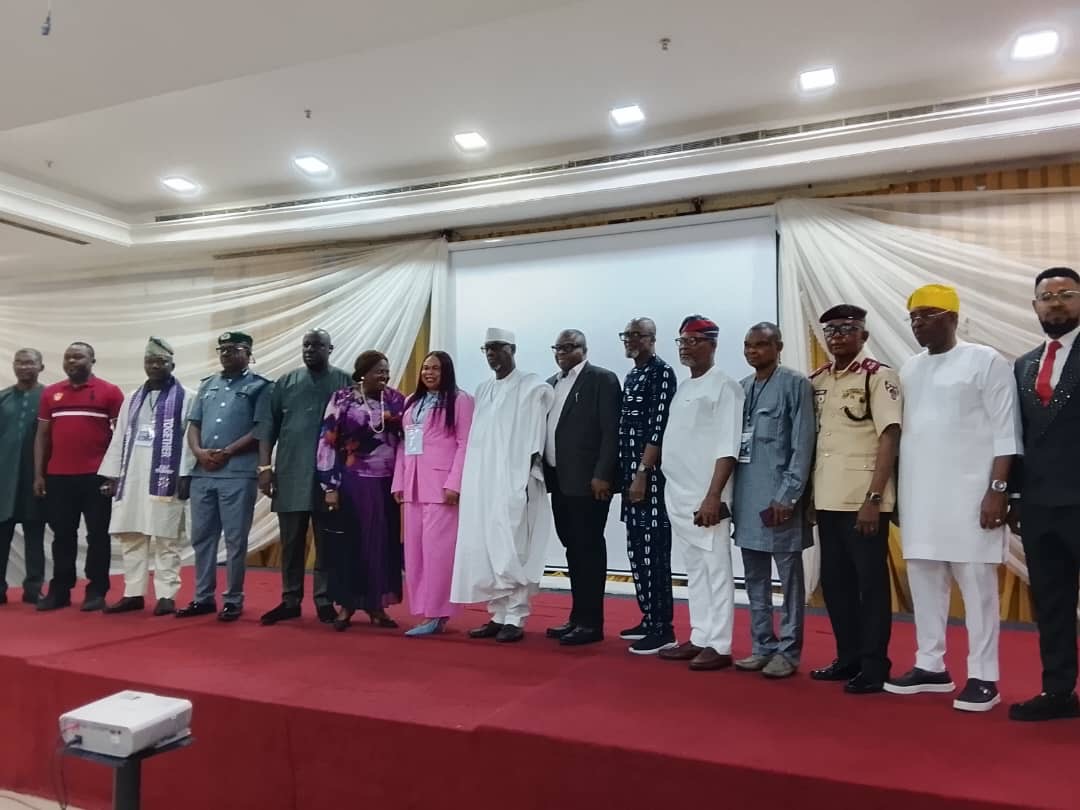
Officials at the conference.
By Ita Williams, Calabar
The Chairman of the Chartered Institute of Logistics and Transport (CILT), Calabar Branch, Dr. Aniefiok Iton, has stressed the need for Nigeria and other Gulf of Guinea nations to formalise maritime trade activities in order to unlock the enormous opportunities presented by the African Continental Free Trade Agreement (AfCFTA).
Dr. Iton spoke during the technical session of a two-day conference themed, “Promoting Coastal Maritime Trade with Littoral Countries Along the Gulf of Guinea,” held at Metropolitan Hotel, Calabar, Wednesday through Thursday.
The conference attracted maritime experts, transport practitioners, academics, government officials and stakeholders from across the region who gathered to discuss strategies for improving coastal trade and transportation management.
Speaking on the topic, “Promoting Maritime Trade and Transport Management Under AfCFTA,” Dr. Iton described the conference as timely, noting that the maritime sector remains critical to regional economic growth and revenue generation.
According to her, practitioners in the logistics and transport industry continue to witness widespread informal trading activities around Nigeria’s waterfronts and border communities, a trend he said deprives governments of significant revenue.
“This conference is very important because many people involved in trade activities do not fully understand the formal processes required in maritime operations,” she said.
Dr. Iton, who is also a Fellow, Chartered Institute of Logistics and Transport, and Vice President CALCCIMA, explained that the event was organised to create awareness and provide practical training aimed at helping traders and operators transition from informal practices to structured and regulated systems.
Dr. Iton stated that formalising coastal trade would improve efficiency, increase competitiveness and provide proper documentation that could assist governments in monitoring and generating revenue from maritime commerce.
She further noted that Cross River State stands to benefit immensely if stakeholders embrace structured coastal trade systems linked to the Gulf of Guinea market.
“Instead of allowing these activities to remain informal, there should be proper documentation and regulation. That way, government can generate revenue while traders operate within recognised frameworks,” he added.
The CILT chairman also highlighted the need for sustained human capacity development in the maritime and logistics sector, insisting that passion and continuous learning remain essential for professionals.
“Learning never stops in maritime trade and logistics. Practitioners must continue to engage, collaborate, learn and relearn because the transport sector keeps evolving,” she said.
Dr. Iton disclosed that discussions were ongoing with state governments, ministries and agencies to encourage massive investment in capacity building programmes for young people interested in maritime careers.
She expressed optimism that increased participation by youths would expand the sector’s workforce and strengthen regional trade competitiveness.
One of the lead speakers, Rector of the Marine and Ocean Academy, Akwa Ibom State, Dr. Kingsley Ekwere, underscored the strategic importance of the Gulf of Guinea to global commerce.
Dr. Ekwere, who delivered a lecture on “Promoting Maritime Trade with Littoral Countries Along the Gulf of Guinea,” said the region covers nearly 6,000 kilometres stretching from Senegal to Angola.
According to him, effective trade promotion within the region requires strong connectivity, integration, partnership and adequate security arrangements among participating nations.
“If we are serious about trade promotion, then we must also be serious about maritime security, integration and regional cooperation,” he said.
He identified ports as critical infrastructure necessary for driving economic activities under the African Continental Free Trade Agreement.
The maritime scholar noted that governments across Africa were investing heavily in constructing new ports and rehabilitating old ones to meet growing trade demands.
“Ports are strategic gateways for maritime trade. Without functional ports, countries cannot fully participate in the enormous opportunities available under AfCFTA,” he stated.
Dr. Ekwere also raised concerns over maritime crimes, including piracy and cyber-related threats affecting regional trade operations.
He explained that countries in West and Central Africa were collaborating through frameworks such as the Yaoundé Code of Conduct to combat piracy and other criminal activities in the Gulf of Guinea.
The Rector warned that cybercrime and technology-driven attacks were becoming major threats to maritime operations, stressing the need for digital security and intelligence sharing among nations.
“There is a need for stronger partnerships and collaboration to improve safety and enhance maritime connectivity across the region,” he said.
Dr. Ekwere further observed that increasing geopolitical tensions around the Strait of Hormuz were gradually shifting global maritime attention towards the Gulf of Guinea.
He explained that the Strait of Hormuz currently handles a significant percentage of the world’s oil and gas shipments, but insecurity and blockades in the region have forced many nations to seek alternative routes.
“The Gulf of Guinea is emerging as a strategic alternative to the Gulf of Hormuz. This development presents enormous opportunities for African countries located along the corridor,” he noted.
He urged Nigerian businesses and investors to position themselves quickly before foreign competitors dominate the emerging market opportunities.
According to him, ports across Cross River, Akwa Ibom, Lagos and other coastal regions would increasingly become critical hubs for international trade, oil and gas movement and logistics services.
Dr. Ekwere insisted that port development projects should never be politicised, warning that delays in maritime infrastructure could limit Africa’s ability to benefit from global trade opportunities.
“Port projects are too important to be tied to politics.
Governments must take them seriously because they are essential to economic growth and regional trade expansion,” he said.
He reiterated that the AfCFTA framework has opened a massive continental market capable of generating enormous wealth for participating nations if supported with modern maritime infrastructure.
The conference featured a panel session on “Promoting Trade with All Modes of Transportation Along the Gulf of Guinea,” where experts examined the role of integrated transport systems in boosting trade.
Stakeholders at the conference collectively called for stronger investment in coastal transport systems, maritime education, regional security cooperation and private sector participation to strengthen trade across the Gulf of Guinea.
Participants also enumerated the essence of continuous awareness campaigns and professional training programmes to ensure that local operators understand international maritime trade procedures and standards.
The conference ended with renewed calls for collaboration among governments, maritime institutions and private investors to transform the Gulf of Guinea into a globally competitive trade corridor capable of driving economic growth across Africa.